
Digger Diaries | March-April
- Jessica Russell Hilton
- Mar 2
- 8 min read
7 Amazing Ways Gardening Makes Us Happier, Healthier, and More Creative

Just think: Even the simplest garden can produce fresh vegetables, beneficial herbs, and beautiful flowers from the dirt. As if that weren’t miraculous enough, it turns out food and flowers are just some of the ways tending a garden can improve our lives.
These days, a growing body of research confirms what most gardeners have known—or at least strongly suspected—for a long time: The simple act of growing plants can also help our mental health, physical fitness, and even creativity blossom.
So, is gardening the ultimate wellness habit? Below, discover seven science-backed ways your garden improves your well being. Plus, find out how to cultivate each benefit in your own patch of Southern soil.
1. Gardening Is A Natural Mood Lifter
Go ahead, touch that dirt. Simply having soil on our hands can make us happier. Just like getting sunshine on our shoulders. Or, a little exercise. The thing is, as gardeners, we experience all these

conditions at once. That makes our favorite hobby a triple-action mood booster.
How does it work? Researchers agree that both sunlight and movement can lower stress hormones and lift our mood. Some studies even suggest the soil microbe Mycobacterium vaccae may increase serotonin in our brains. Among other vital functions, serotonin regulates feelings of happiness.
How Can Deep-South Gardeners Harvest More Happiness?

Embrace imperfection. Did you notice these findings say nothing about the way your garden looks, how productive it is, or whether rabbits are eating your petunias? Imperfections and all, your garden can make you happier—just by engaging with it. Which brings us to the next point…
Get outdoors as much as you can. It’s like the saying goes: “If you don’t like the weather in Mississippi (or Alabama, or Louisiana), wait five minutes.” Around here, avoiding heatstroke is usually the challenge, though Jack Frost nips, too. Personally, I’ve learned the right hat, bug net, or footwear can make-or-break my comfort.
Be intentional. On days when we can’t garden outdoors, get creative. Tend to houseplants, bring tools indoors to sharpen or clean, or soak up some Vitamin D through a sunny window. Your mood will thank you.
Sources:
Lowry et al. (2007). An immune-responsive antidepressant-like effect of soil bacteria. Neuroscience.
Bratman et al. (2019). Nature and mental health. Science Advances.
2. Birdsong Lowers Blood Pressure

Many nature sounds are calming to humans. But few can rival the effect of birdsong when it comes to lowering blood pressure, heart rate, and the stress hormone cortisol. Recent research may explain just why that is.
Human nervous systems have likely associated birdsong with a signal that it’s safe to relax for a very long time. Generally, songbirds sing when they don’t detect imminent danger—be it a snake or a brewing storm.
When birdsong suddenly falls silent, it could mean it’s time to duck and cover, and not just for our feathered friends.

Want More Birdsong in Your Southern Garden?
Go wild. Grow native plants to attract birds year-round. In the spring, native plants feed caterpillars, which birds feed their nestlings. In the fall and winter, birds eat seed heads.
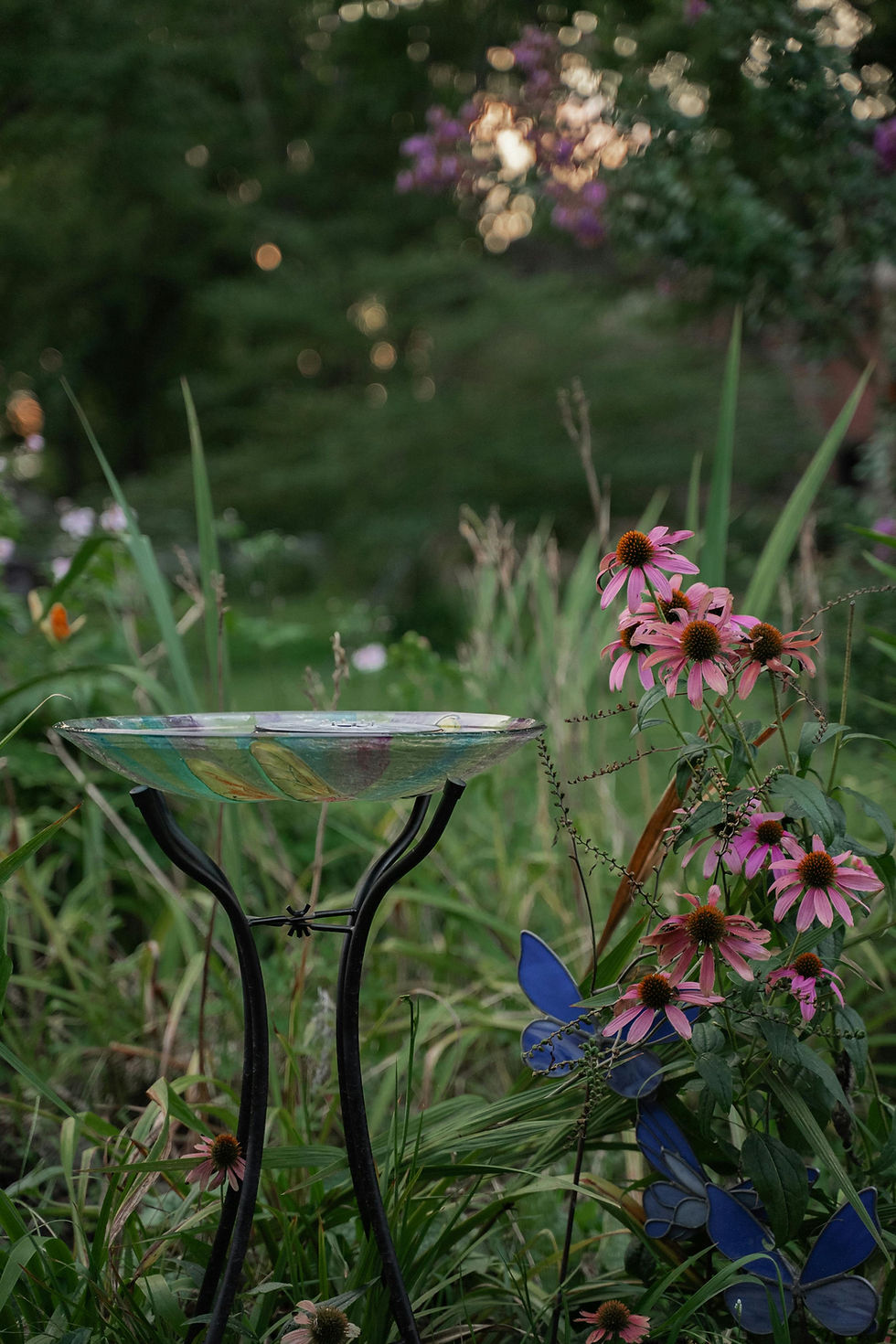
Just add water. Add shallow water features, like birdbaths, bubblers, or small ponds. Birds need drinking water, especially during droughts, and a place to bathe.
Brush up. Leave some brush and branches to help birds hide from predators. They won’t sing if they don’t feel safe.
Sources:
Ratcliffe et al. (2013). Birdsong and stress recovery. Biosemiotics.
Christoph Randler (2026) Paying attention to birdsong while walking in nature can boost wellbeing, my research shows. The Conversation.
3. Gardening Lets Busy Grownups Play

Grownups need play, just like children do—especially play that’s open-ended and involves all five senses. Alas, play is rarely on the agenda. After all, there’s always another responsibility calling.
Fortunately, one of those responsibilities is tending our garden. And that, it turns out, can put adults into an energizing state of play, sometimes called “flow state.”
We can fall into flow state when we’re doing something that’s enjoyable, feels purposeful, and provides just enough challenge to hold our attention. Meanwhile, time flies without us noticing. In our distraction-filled days, gardening offers busy adults the perfect chance to escape into a playful flow state.

Want More Play In Your Gardening Routine?
Let go of the to-do list. As much as you can, tend the garden without a strict agenda, and just notice what happens in your mind.
Use your hands. Prune. Weed. Work soil. Spread mulch. These sensory-rich tasks bring a sense of purpose to physical movement.
You’re it! Decisions will need to be made: Shape the shrubs into perfect hedges, or let them be loose and natural? You decide. No wrong answers.
Let your imagination run wild. Daydream about what you’d like to do with that wild patch in the corner or the color scheme for next season’s accent annuals.
Sources:
Csikszentmihalyi, M. (1990). Flow: The Psychology of Optimal Experience.
Scott et al. (2015). Therapeutic horticulture and mental well-being. Journal of Public Health.
4. Gardening Is A Sneaky Workout

Not everybody likes the gym. Not everyone enjoys a daily run. But chances are, if you’re reading this, you at least garden. Which means you may be getting more exercise than you think.
Squatting, lifting, reaching, bending, walking on uneven terrain: These challenges are necessary for long-term mobility—and, conveniently, gardening. Tending to plants may not provide the high-intensity cardio of a spin class, but it’s just the kind of gentle workout that builds strength, balance, flexibility, and endurance while being easy on the joints.
How Can Your Garden Help You Stay Fit?
Go manual. Choose manual tools whenever possible—say, to trim hedges or dig holes.
Mix it up. Alternate between digging, weeding, and carrying bags of mulch to keep the body balanced. Avoid repeating any motion for long periods of time.
Move with care. Practice healthy postures for lifting, squatting, and bending. “Lift with your legs” applies to bags of soil and wheelbarrows! Better yet, stretch before and after.
Hydrate. As is the case for all Southern gardeners, don’t mess with heat stress.
Sources:
Park et al. (2014). Gardening as physical activity. American Journal of Public Health.
CDC. Physical Activity Guidelines for Americans.
5. Green Views Inspire Creativity

The Pulitzer Prize-winning author Eudora Welty did her writing from her Mississippi home, where every window framed a beautiful view of the garden. Her mother, Chestina Welty, made sure of that when she planned the flowerbeds in 1925.
Interestingly, in a phenomenon now called “the green effect,” research suggests that simply viewing the color green—even through a window—makes people more creative. Perhaps the Weltys were on to something.
When it comes to designing a garden, how much green you can see from inside your home may be one factor worth prioritizing.
How To Sow More Inspiration In Your Garden
Look out. Make sure you can see at least some greenery from big picture windows, the kitchen window, and anywhere your household spends time.
Make a scene. Place a clear focal point, such as a birdbath, tree, bench, or archway, outside each window view.
Stay green. Layer evergreen trees, shrubs, and groundcovers for year-round green color.
Pot it up. Soften views of buildings or hardscapes with container plants, baskets, and vertically trellised vines. (Use a soil mix especially for containers, like Penick Organics Diggers Delight Premium Potting Soil.)
Sources:
Stephanie Lichtenfeld et al. (2012). Fertile Green: Green Facilitates Creative Performance
Ulrich et al. (1991). Stress recovery during exposure to natural environments.
6. Gardening Builds Mental Focus

As Americans battle ever-shrinking attention spans, gardening may be a surprising ally in the fight against distraction. How so? Turns out gardening is, well, grounding.
For recovering multitaskers, gardening helps train the brain to concentrate on one task at a time. After all, simply spending time in natural environments can restore attention and reduce mental fatigue.
Beyond getting us outdoors, many garden tasks are pleasantly repetitive—think pruning, watering, and weeding. That helps keep our minds in the moment. It also explains why someone who might never sit and meditate may easily stay focused on the present when puttering among their plants.
Incredibly, the concentration-boosting benefits of gardening are so powerful, they benefit many people with ADHD. Gardening raises dopamine levels (which ADHD brains need). It also provides a low-pressure environment where creativity can flourish—and rewards busy hands with the satisfaction of visible results. In other words, it’s the perfect recipe to calm even the busiest of minds.
How To Garden With Mindfulness In Mind
Make it routine. Spend 15–20 minutes a day gently tending plants to establish a consistent rhythm.
Keep it simple. When gardening to calm your mind, choose simple, repetitive tasks, like watering or pulling weeds.
Pay attention. Make a point to notice the feel of the soil, smells from plants, and the sounds of birds.
Drown distractions. Use a water feature, chimes, or hedge screens to drown out street noise and unsightly views.
Sources:
Kaplan & Kaplan (1989). The Experience of Nature.
Berman et al. (2008). Cognitive benefits of interacting with nature. Psychological Science.
Gaby Clark et al. (2025) Survey identifies top factors Americans blame for declining focus and attention. Ohio State University Medical Center.
7. Gardening Cultivates Friendships

Just like eating right and getting exercise, research suggests that a healthy social life can make us more likely to live longer. Loneliness, on the other hand, is associated with higher rates of heart disease, depression, and dementia.
In an age when about half of Americans report struggling with loneliness, gardening could provide a much-needed antidote. Growing plants just has a way of bringing people together.
One of the best parts of gardening is the people you meet along the way: The friend who shares cuttings of her houseplants. The neighbor who gives tried-and-true gardening advice. The passer-by who stops to complement your flowers. Not to mention, the people whose days you brighten when you share homegrown veggies (hello, zucchini season!) or a bunch of fresh-cut zinnias, just because. It’s the stuff that turns strangers into friends.
Through sharing seeds, plants, triumphs, and tribulations, gardening strengthens our social ties, rooting us deeply into our hometowns.
How To Let Your Garden Nurture New Relationships
Be open. You never know when you might meet a fellow plant person. We tend to pause and admire every interesting clump of plants we see.
Share. Plant swaps, seed saving groups, and sharing your harvest with friends and family is a fun part of local garden culture. Sharing advice counts, too!
Join in. From local garden clubs, to flower societies, to volunteering at a garden, joining a group can instantly connect you to fellow plant people—or, as we like to say, diggers.
Sources:
Giulia Cambieri (2024). The importance of connections: Ways to live a longer, healthier life. Harvard T.H. Chan School of Public Health.
Kingsley & Townsend (2006). Dig In to Social Capital. Urban Policy and Research.
Alaimo et al. (2010). Community gardening and social health. Health & Place.
The amazing truth is that our gardens really are so much more than soil and plants. They have the potential to enhance our well being in ways we might not have expected—helping us feel happier, calmer, more focused, more fit, more creative, and more connected.
So if you ever wondered whether playing in the dirt was time well spent…now you know the science.



Comments